When does fall really begin? Understanding the autumnal equinox
Prepared with guidance from more than 30 years of professional television meteorology and weather-communication experience.
Fall has two widely used starting dates. Here is why the equinox moves on the calendar and how astronomical fall differs from meteorological fall.
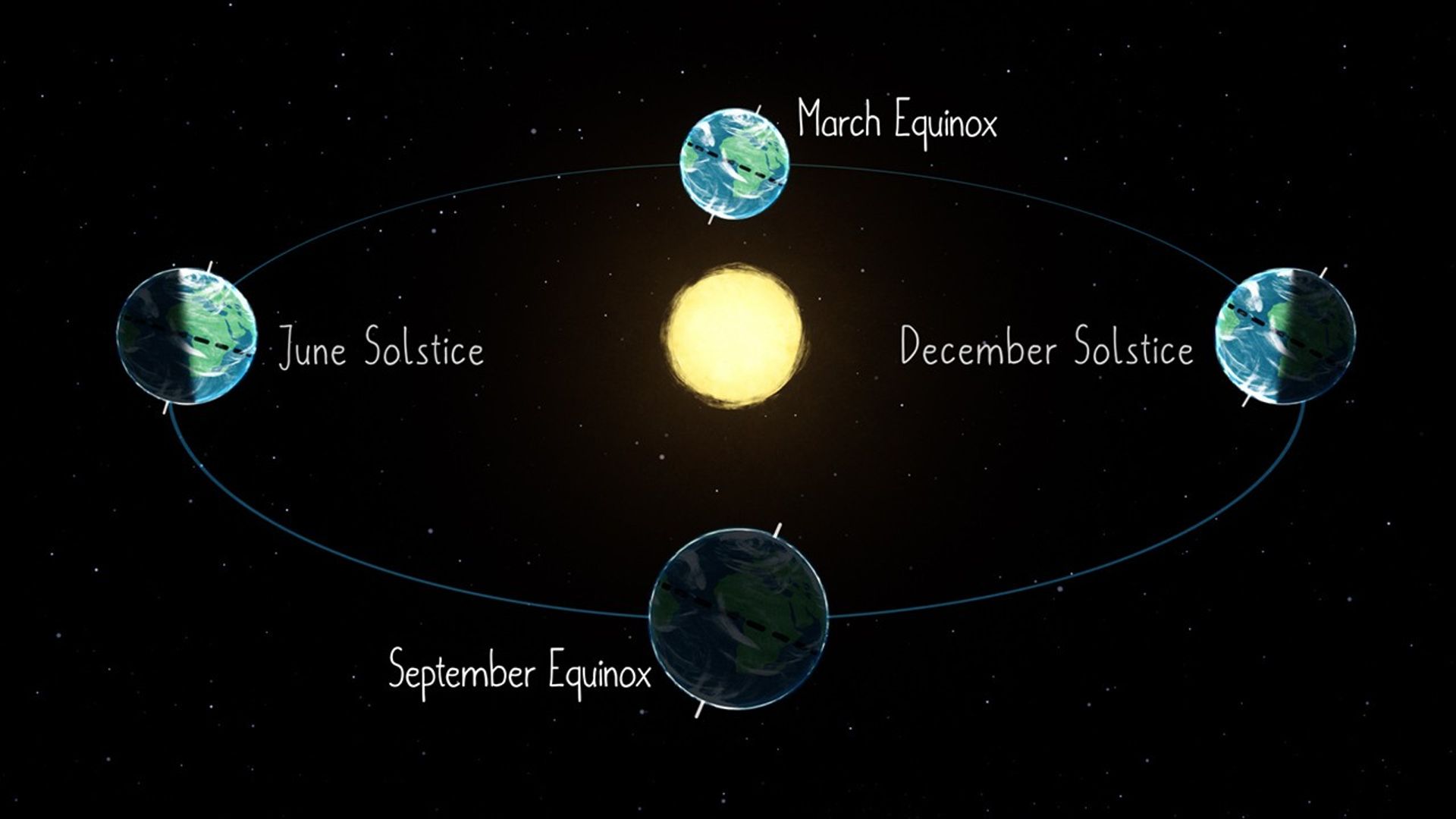
For many people, fall begins when temperatures cool, leaves change color and daylight fades noticeably earlier. On the calendar, however, autumn has two commonly recognized starting dates. Meteorological fall begins every year on September 1. Astronomical fall begins at the autumnal equinox, usually on September 22 or September 23 in the Northern Hemisphere. Both definitions are useful, but they serve different purposes.
The autumnal equinox is the precise moment when the center of the Sun crosses the equator while moving southward. At that moment, neither the Northern Hemisphere nor the Southern Hemisphere is tilted toward the Sun. The event marks the beginning of astronomical fall in the Northern Hemisphere and astronomical spring in the Southern Hemisphere.
In 2026, the September equinox occurs at 00:05 UTC on September 23. That corresponds to September 22 across the continental United States: 8:05 p.m. EDT, 7:05 p.m. CDT, 6:05 p.m. MDT and 5:05 p.m. PDT. The equinox is an exact astronomical event, not an entire day.
The word equinox comes from Latin words meaning equal and night, but most locations do not receive exactly 12 hours of daylight and 12 hours of darkness on the equinox. Earth’s atmosphere bends sunlight, allowing the Sun to remain visible when it is geometrically just below the horizon. Sunrise and sunset are also measured using the outer edge of the Sun rather than its center. These effects add several minutes to the measured length of daylight. The date when day and night come closest to equal depends on latitude and may occur several days before or after the equinox.
The date varies because Earth does not complete its orbit around the Sun in exactly 365 days. One orbit takes approximately 365.24 days. Our ordinary calendar contains 365 days, with an additional day added during most leap years. Because the calendar and Earth’s orbit do not line up perfectly, the time of the equinox moves by several hours from one year to the next. The leap-year correction then moves it back on the calendar. Time zones can also change the listed date. The same equinox can occur late on September 22 in the United States but already be September 23 elsewhere.
Astronomical seasons are based on Earth’s position relative to the Sun. Astronomical fall begins at the September equinox and ends at the December solstice. Its starting time and date can vary slightly each year. This definition describes what is happening in Earth’s orbit, but it does not necessarily match the weather outside. Summerlike heat can continue after the equinox, while an early cold front can make it feel like fall before astronomical autumn begins.
Meteorological seasons divide the year into four fixed groups of three complete calendar months. In the Northern Hemisphere, meteorological spring is March through May, summer is June through August, fall is September through November, and winter is December through February. Meteorological fall therefore begins every September 1 and ends November 30.
Meteorologists and climatologists use these fixed seasons because they make it easier to compare temperature, precipitation and other weather records from one year to another. Each season contains three whole months and begins on the same date every year.
Both definitions of fall are correct. Astronomical fall describes Earth’s changing position relative to the Sun. Meteorological fall provides a consistent system for organizing weather and climate records. Neither date controls the weather. Seasonal temperature changes develop gradually and can vary considerably by location and from year to year. After the September equinox, nights continue growing longer and days continue becoming shorter in the Northern Hemisphere until the winter solstice in December.